

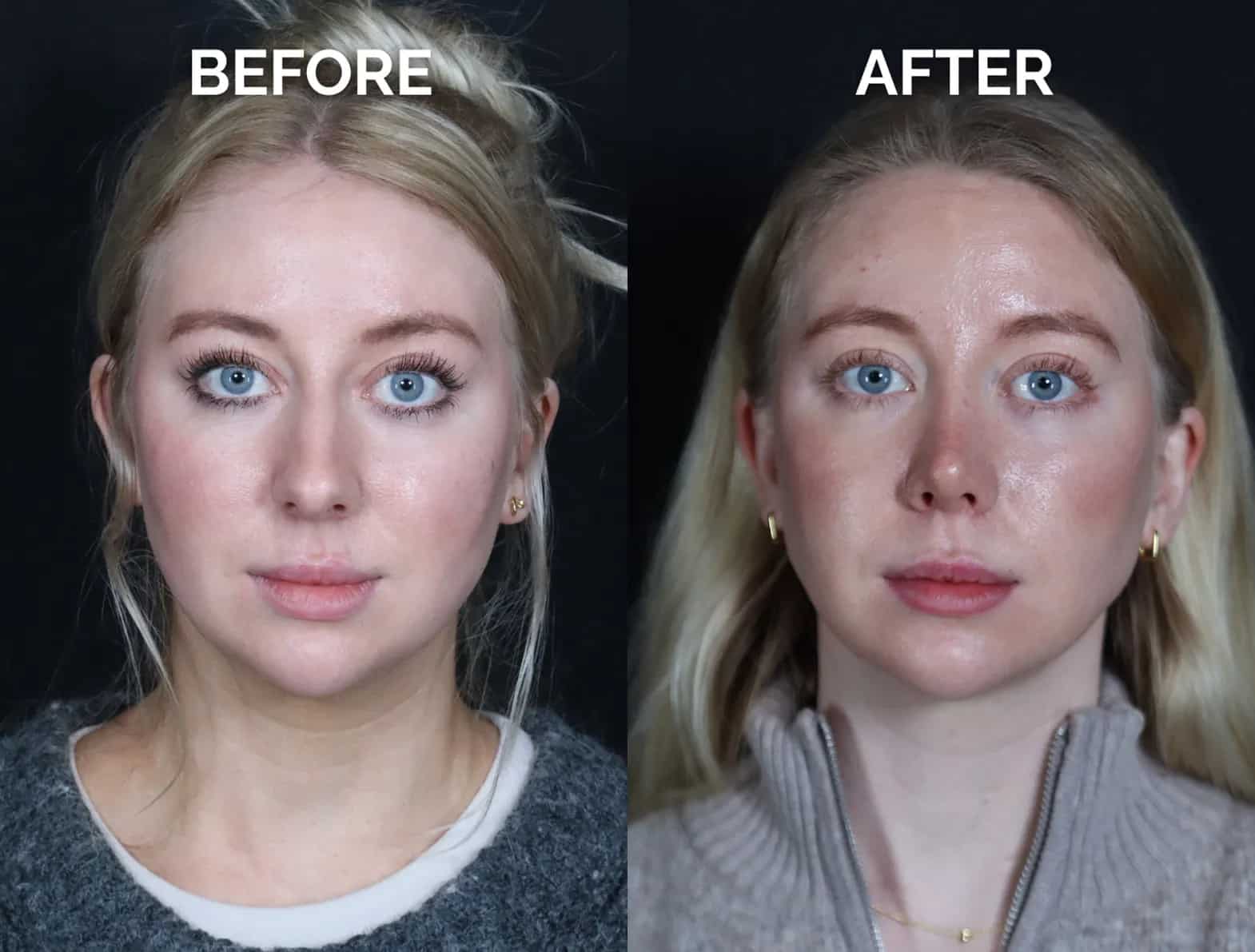
Restore Form, Function & Confidence After Previous Nose Surgery
Revision rhinoplasty is one of the most complex procedures in facial plastic surgery because no two noses—and no two previous surgeries—are ever the same. Some patients seek revision because they are unhappy with the appearance of their nose, while others continue to experience breathing difficulties or structural problems after an earlier procedure. Many are dealing with both cosmetic and functional concerns.
At Noses and Necks NYC, double board-certified facial plastic surgeon Dr. Anil Shah specializes in advanced revision rhinoplasty for complex and difficult revision cases. Patients seeking thoughtful, individualized solutions after failed nose surgery, previous cosmetic rhinoplasty, or functional nasal surgery can benefit from personalized revision planning. Using the latest surgical techniques, detailed anatomical analysis, and customized treatment planning, Dr. Shah develops revision strategies designed to restore both nasal function and natural facial harmony.
Many patients seeking revision rhinoplasty arrive feeling frustrated or uncertain after a previous experience. Dr. Shah understands these concerns and believes every revision begins with listening carefully, evaluating what has changed structurally, and developing a personalized surgical plan based on each patient’s anatomy, goals, and healing characteristics.
Whether your concerns involve breathing, asymmetry, persistent cosmetic issues, or a more complex structural deformity, the goal is always the same—to create a nose that looks natural, functions properly, and fits your face.
What Is Revision Rhinoplasty?
Revision rhinoplasty—sometimes called secondary or redo rhinoplasty—is a procedure performed to improve the appearance, function, or structural support of a nose that has previously undergone surgery.
Some patients pursue revision because their original rhinoplasty did not fully achieve their aesthetic goals. Others develop breathing problems, structural collapse, asymmetry, or changes that become more noticeable as healing progresses. In some cases, trauma after a previous rhinoplasty may also require corrective surgery.
Revision rhinoplasty often requires a different level of planning than primary rhinoplasty. Previous surgery may have altered the natural anatomy of the nose, created scar tissue, or removed cartilage that normally provides structural support. Because of these factors, revision surgery requires a highly individualized approach and careful decision-making.
Fortunately, advances in surgical techniques, structural grafting, imaging technology, and our understanding of nasal anatomy have expanded what is possible. Many patients who were once told that little or nothing could be done may now have treatment options that restore both appearance and nasal function.
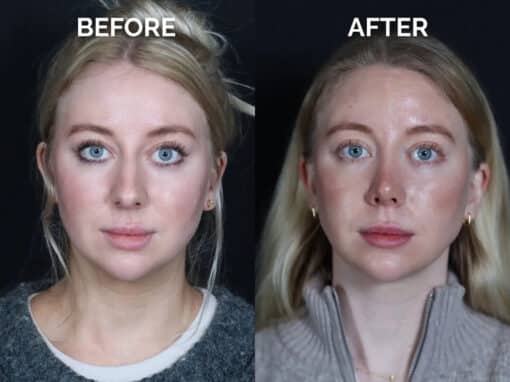
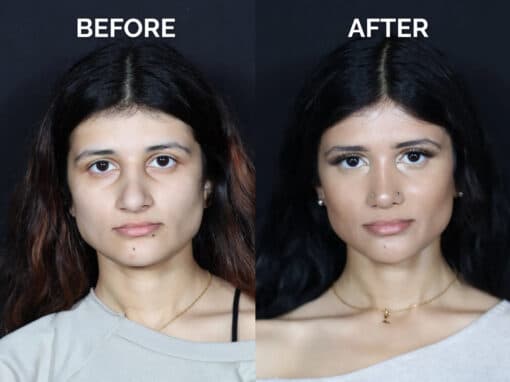
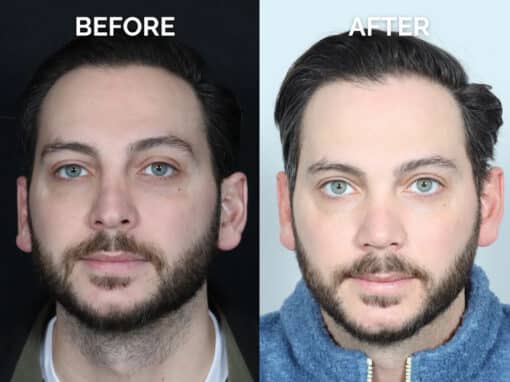
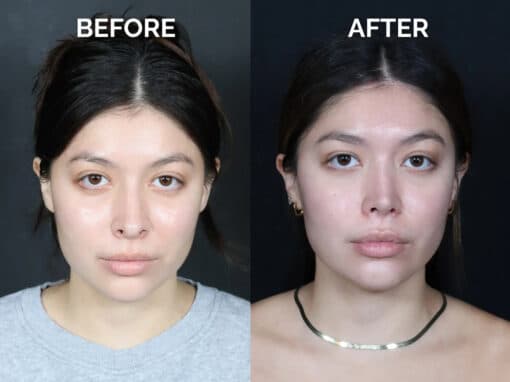
Every revision rhinoplasty performed by Dr. Shah is carefully tailored to the individual patient, with the goal of achieving long-lasting, natural-looking results that complement the rest of the face while maintaining healthy nasal support.
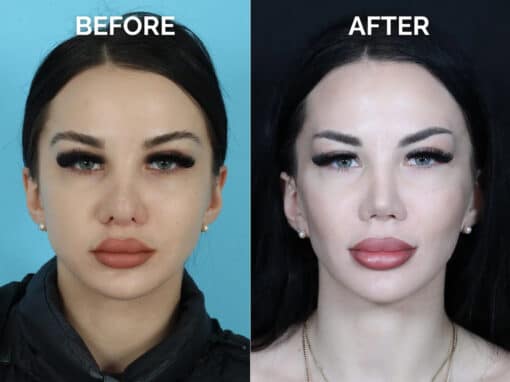
Why Patients Choose Revision Rhinoplasty
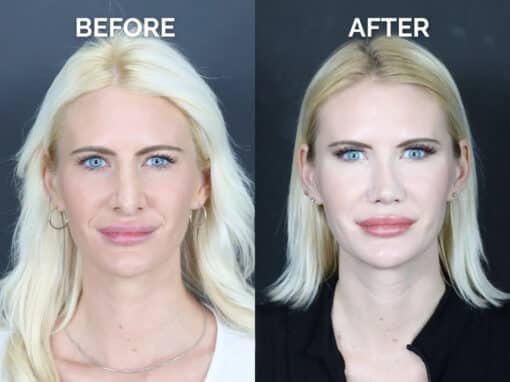
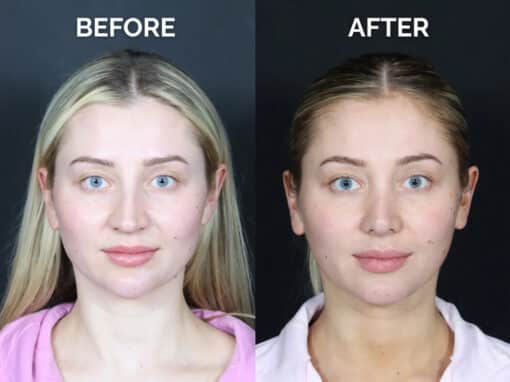
Patients pursue revision rhinoplasty for many different reasons, and each case presents its own unique challenges. While some concerns are primarily cosmetic, others involve breathing difficulties or structural problems that affect both function and appearance.
Common reasons patients seek revision rhinoplasty include:
- Persistent nasal asymmetryÂ
- A bridge that appears too high, too low, or irregularÂ
- A pinched or over-rotated nasal tipÂ
- Loss of tip support or projectionÂ
- Breathing difficulties following previous surgeryÂ
- Collapse of the nasal valvesÂ
- Visible scar tissue or contour irregularitiesÂ
- Dissatisfaction with the overall appearance of the noseÂ
- Changes following trauma after a previous rhinoplastyÂ
- A desire to restore a more natural-looking resultÂ
During your consultation, Dr. Shah performs a comprehensive evaluation to determine not only what concerns you have, but why they developed. Understanding the underlying cause allows him to recommend the most appropriate treatment rather than simply addressing the visible symptoms.
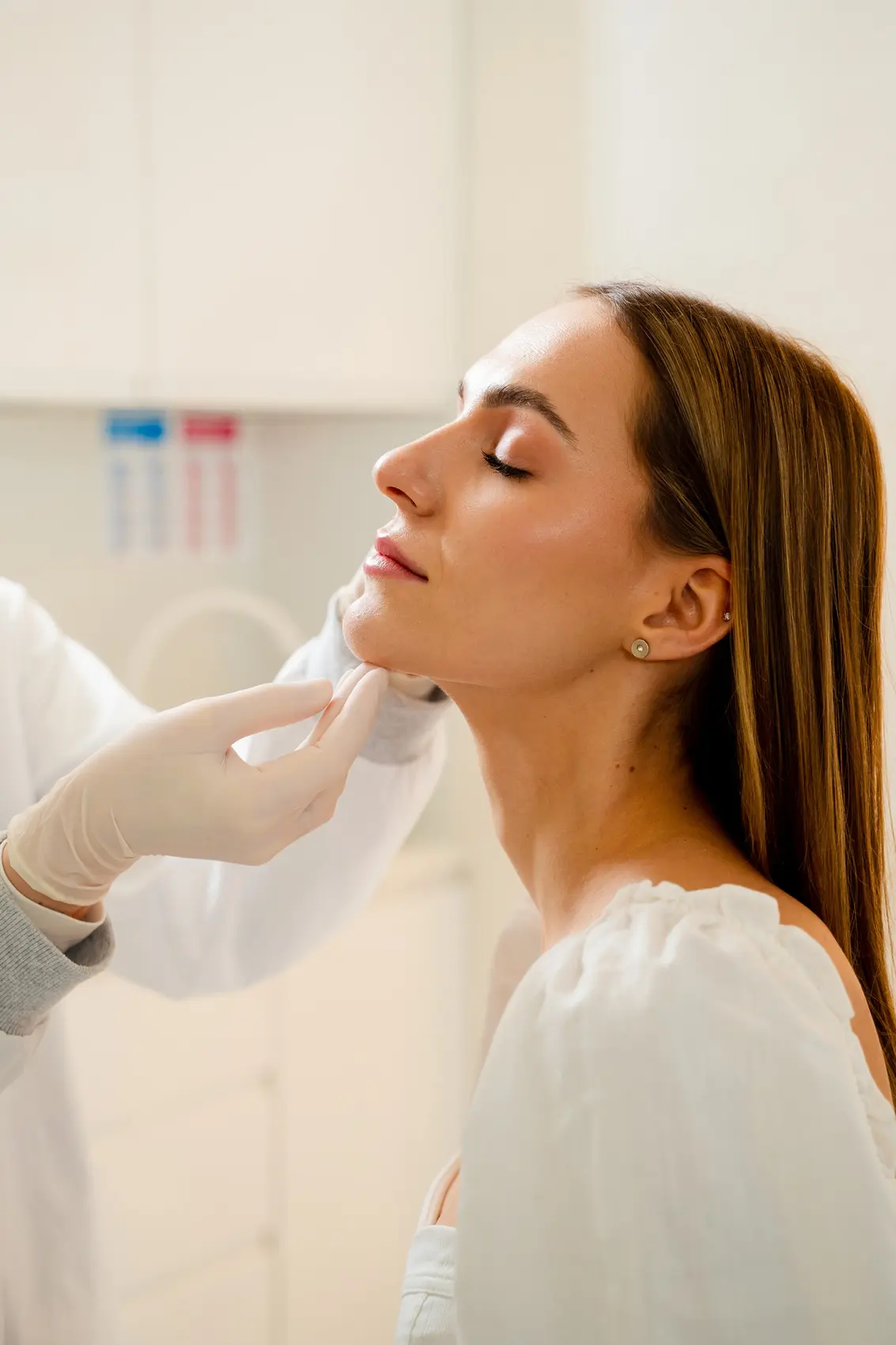
Why Revision Rhinoplasty Is More Complex Than Primary Rhinoplasty
Revision rhinoplasty is widely considered one of the most technically demanding procedures in facial plastic surgery. Unlike a primary rhinoplasty, where the surgeon works with untouched anatomy, revision surgery involves tissues that have already healed, changed, and adapted after a previous operation.
Challenges commonly encountered during revision surgery include:
- Scar tissue from previous procedures
- Altered or weakened nasal support structures
- Missing or insufficient cartilage
- Changes in skin thickness and elasticity
- Distorted anatomical landmarks
- Functional breathing problems
- Healing patterns that differ from primary surgery
These factors require careful planning, precise surgical technique, and a thorough understanding of both nasal anatomy and the long-term behavior of healing tissues.
Rather than applying the same approach to every patient, Dr. Shah develops a customized surgical strategy based on your existing anatomy, previous surgical history, functional concerns, and desired outcome. This individualized planning helps maximize both aesthetic improvement and long-term structural stability.
Why Choose Dr. Anil Shah for Revision Rhinoplasty in NYC?
Revision rhinoplasty is about far more than correcting what can be seen on the surface. Successful revision surgery requires a thorough understanding of nasal anatomy, structural support, facial balance, and the unique challenges created by previous procedures. Every revision presents a different set of variables, making experience one of the most important factors when selecting a surgeon.
Dr. Anil Shah is a double board-certified facial plastic surgeon who has dedicated much of his career to advancing rhinoplasty techniques through clinical research, surgical innovation, and physician education. Patients from New York City and around the world seek his expertise for complex primary and revision rhinoplasty because of his thoughtful, analytical approach and commitment to natural-looking results.
Dr. Shah often compares revision rhinoplasty to architecture. An architect would never begin constructing a building without first understanding its existing foundation, structural support, and long-term stability. Likewise, successful revision rhinoplasty begins with a careful analysis of what remains from the previous surgery before developing a customized plan for reconstruction.
Every revision requires balancing science with artistry. Structural support must be restored to maintain proper nasal function, while every refinement must remain proportional to the patient’s unique facial features. Dr. Shah combines detailed anatomical analysis, advanced imaging technology, and years of surgical experience to create individualized treatment plans that prioritize both function and aesthetics.
Rather than applying a one-size-fits-all approach, Dr. Shah carefully determines the least invasive technique capable of achieving the desired result. For some patients, this may involve only a minor refinement. Others may require more comprehensive structural reconstruction. Every recommendation is based on the patient’s anatomy, previous surgery, and long-term goals—not simply the appearance of the nose today.
Patients from New York City, throughout the East Coast, across the United States, and internationally choose Dr. Shah for revision rhinoplasty because he offers:
- Double board certification in facial plastic surgeryÂ
- Extensive experience dealing with complex revision rhinoplasty casesÂ
- Advanced expertise in both cosmetic and functional nasal reconstructionÂ
- Comprehensive consultation and individualized surgical planningÂ
- Advanced imaging and detailed facial analysisÂ
- A philosophy centered on natural-looking, structurally sound resultsÂ
- Personalized care for local, national, and international patients
Understanding the Revision Rhinoplasty Spectrum
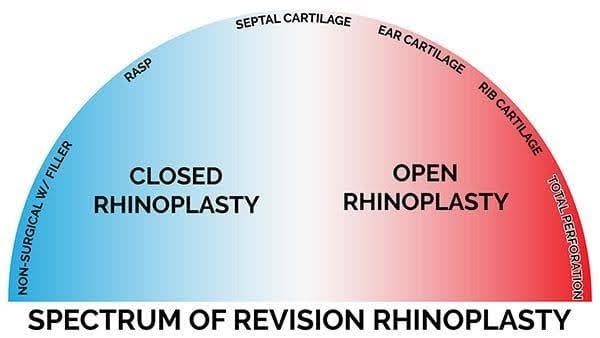
No two revision rhinoplasty procedures are alike. Some patients require only a small refinement to improve a minor contour irregularity, while others need comprehensive reconstruction to restore both appearance and breathing. Rather than viewing every revision as the same procedure, Dr. Shah approaches revision rhinoplasty as a spectrum of treatment options, allowing each surgical plan to be tailored to the patient’s specific anatomy and goals.
At one end of the spectrum are minimally invasive treatments that address subtle cosmetic concerns with little downtime. At the other end are highly complex reconstructive procedures requiring cartilage grafting and structural rebuilding.
Understanding where your concerns fall along this spectrum is one of the most important parts of the consultation process and helps determine the most appropriate treatment approach.
Non-Surgical Revision Rhinoplasty
Not every concern following rhinoplasty requires another surgical procedure.
For carefully selected patients, non-surgical revision rhinoplasty may improve small contour irregularities using injectable fillers. This approach can be effective for camouflaging minor depressions, smoothing subtle bridge irregularities, or improving overall symmetry without surgery.
Non-surgical revision rhinoplasty is best suited for patients seeking modest cosmetic improvements rather than structural changes. Because fillers add volume rather than remove it, they cannot make the nose smaller, correct significant deviations, or resolve breathing problems.
The anatomy of a previously operated nose is often significantly different from a nose that has never undergone surgery. For this reason, non-surgical revision rhinoplasty should only be performed by an experienced rhinoplasty surgeon with an in-depth understanding of nasal anatomy and vascular safety.
During your consultation, Dr. Shah will determine whether injectable treatment or revision surgery offers the safest and most predictable path toward your goals.

Micro Revision Rhinoplasty
Some patients are pleased with the overall outcome of their rhinoplasty but remain bothered by one or two small imperfections. In these situations, a micro revision may be appropriate.
Micro revision rhinoplasty focuses on correcting limited concerns such as:
- Small bridge irregularitiesÂ
- Minor contour asymmetriesÂ
- Subtle tip refinementsÂ
- Small columellar concernsÂ
- Minor imperfections that developed during healingÂ
Dr. Shah’s extensive training in both closed (endonasal) and open rhinoplasty techniques allows him to select the least invasive approach capable of achieving the desired improvement. In select cases, micro revisions may even be performed in the office, reducing downtime while avoiding a more extensive operation.
Although these procedures are smaller in scope, they still require meticulous planning and precision to preserve the integrity of the previous rhinoplasty while achieving meaningful refinement.
Understanding Cartilage Grafting in Revision Rhinoplasty
One of the most common questions patients ask during a revision rhinoplasty consultation is whether cartilage grafting is necessary. The answer depends entirely on what remains after the previous surgery.
During a primary rhinoplasty, cartilage may be reshaped, repositioned, or removed to achieve the desired appearance. While these changes can be appropriate, some patients are left with insufficient structural support or simply do not have enough remaining cartilage to accomplish the goals of revision surgery.
When additional support is needed, cartilage grafting allows Dr. Shah to rebuild and reinforce the nose while maintaining both long-term stability and a natural appearance. Rather than using synthetic implants, Dr. Shah utilizes your own cartilage whenever possible. This approach provides excellent compatibility with your existing tissues while reducing the risk of complications associated with artificial materials.
Every revision rhinoplasty requires a personalized surgical plan. The type of cartilage used—or whether grafting is needed at all—depends on your previous surgery, remaining structural support, breathing function, and long-term goals. Rather than relying on a standard formula, Dr. Shah develops an individualized approach based on your unique anatomy and the changes created by your previous rhinoplasty.
Septal Cartilage
Whenever sufficient cartilage remains, the nasal septum is often the preferred source for grafting. Septal cartilage is strong, stable, and ideally suited for rebuilding many areas of the nose because it naturally provides the structural support necessary for both appearance and function.
However, patients who have previously undergone rhinoplasty may have little or no septal cartilage remaining. During your consultation, Dr. Shah carefully evaluates the amount of available cartilage and determines whether it can be used as part of your revision procedure.
Ear Cartilage
When additional cartilage is needed for smaller refinements, cartilage may be harvested from the ear. Although ear cartilage is softer and more flexible than septal cartilage, it can be an excellent option for carefully selected applications, particularly around the nasal tip or areas that require contour refinement rather than major structural support.
The cartilage is removed through a discreet incision hidden behind the ear, and only the amount needed for reconstruction is harvested. In most cases, the overall appearance of the ear remains unchanged.
Rib Cartilage
For more complex revision rhinoplasty procedures, rib cartilage may provide the strength necessary to rebuild the nose. Patients who have undergone multiple previous surgeries or experienced significant structural collapse often require additional support that cannot be achieved with septal or ear cartilage alone.
Because rib cartilage is both strong and abundant, it allows Dr. Shah to reconstruct major structural components of the nose while restoring projection, stability, and long-term support.
Harvesting and shaping rib cartilage requires significant surgical expertise. Dr. Shah carefully sculpts each graft to match the patient’s anatomy while avoiding unnecessary bulk and maintaining natural facial proportions.
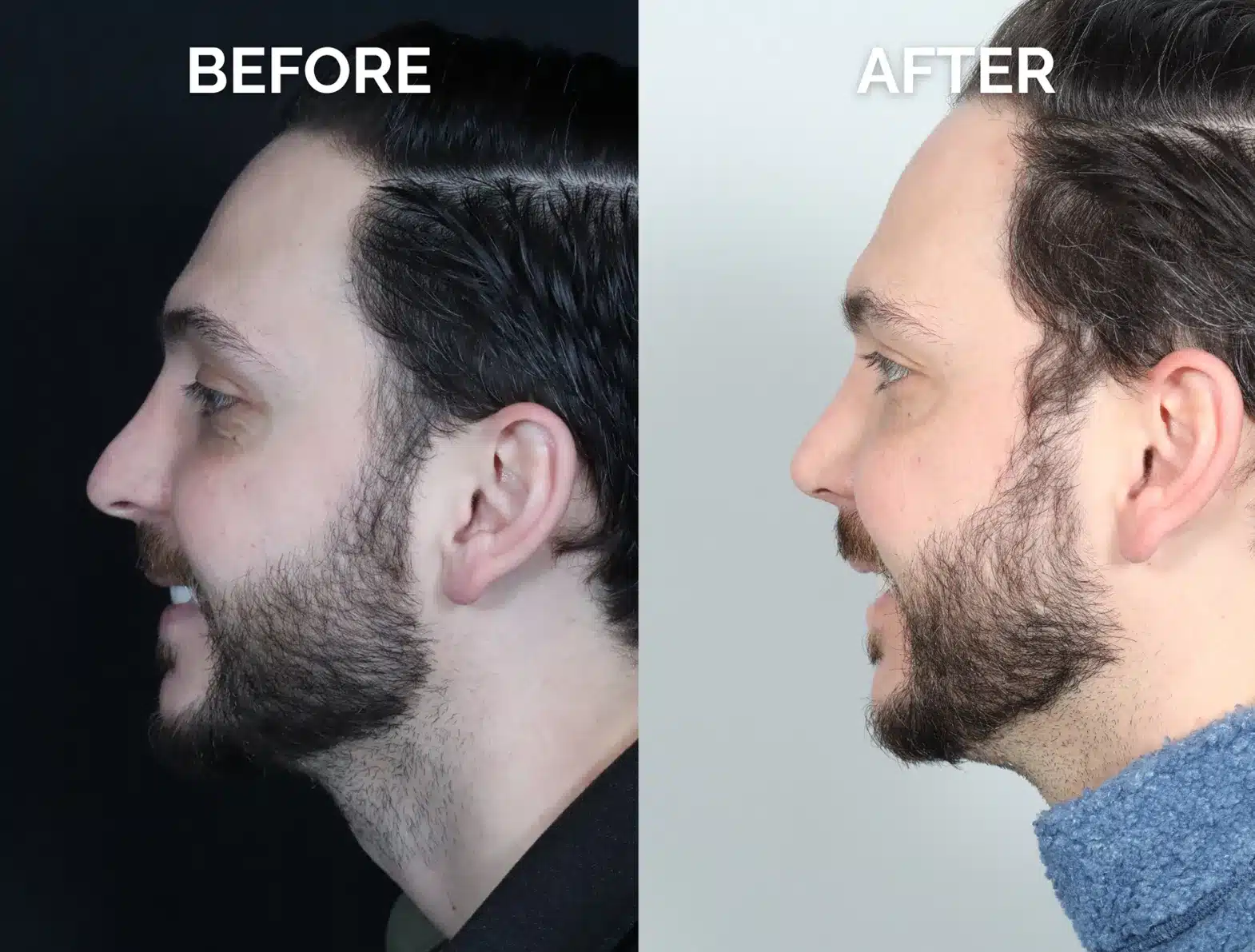
What Happens During Your Revision Rhinoplasty Consultation?
Choosing revision rhinoplasty is a significant decision, and the consultation is one of the most important parts of the entire process. Because every nose has a different surgical history, successful revision surgery begins with understanding not only what concerns you have today, but also how your previous procedure changed the underlying anatomy.
During your consultation, Dr. Shah performs a comprehensive evaluation of both the cosmetic appearance and functional health of your nose. He carefully reviews your previous rhinoplasty, discusses your current concerns, evaluates your breathing, and develops a personalized treatment plan based on your anatomy and long-term goals.Â
Your consultation may include:
- A detailed review of your previous nasal surgery and healingÂ
- Comprehensive examination of your nasal structureÂ
- Evaluation of nasal airflow and breathing functionÂ
- Assessment of scar tissue and remaining structural supportÂ
- Advanced facial photography and 3D imagingÂ
- Discussion of realistic surgical options and expectationsÂ
- A personalized treatment plan designed specifically for your anatomyÂ
Dr. Shah also utilizes validated tools, including the NOSE (Nasal Obstruction Symptom Evaluation) Scale, to better understand how your nose functions in addition to how it looks. Advanced imaging serves as a valuable communication tool, helping patients visualize potential improvements while allowing Dr. Shah to explain what is surgically achievable based on their individual anatomy.
Because communication is essential in revision rhinoplasty, Dr. Shah encourages patients to ask questions and fully discuss their goals before making any decisions. The objective is to ensure both surgeon and patient share the same understanding of what can realistically be accomplished.
Patients travel to Noses and Necks NYC from throughout the United States and around the world for Dr. Shah’s expertise in complex revision rhinoplasty. To make the process as convenient as possible, he offers complimentary virtual revision rhinoplasty consultations, allowing patients to discuss their concerns, review their goals, and begin planning treatment before traveling to New York City.
If surgery is recommended, an in-person examination will be completed prior to your procedure to finalize your surgical plan, review every aspect of the procedure, and answer any questions.
Revision Rhinoplasty Recovery
Recovery following revision rhinoplasty varies depending on the complexity of the procedure and where your treatment falls along the Revision Rhinoplasty Spectrum. Patients undergoing non-surgical treatments often return to normal activities immediately or within a day. Those having micro revisions generally experience a shorter recovery than patients requiring comprehensive structural reconstruction.
For patients undergoing surgical revision rhinoplasty, most are able to return to work or other non-strenuous activities within approximately one to two weeks, although every recovery is unique. Swelling gradually improves over the following months, with continued refinement occurring as the tissues heal.
Because revision rhinoplasty involves previously operated tissues, final results often take longer to develop than after a primary rhinoplasty. Depending on the complexity of the procedure, subtle improvements may continue for up to 18 to 24 months.
Throughout recovery, Dr. Shah closely monitors healing and provides individualized follow-up care. He incorporates advanced surgical techniques designed to minimize swelling and trauma while providing detailed postoperative instructions to support the best possible outcome.
Healing after revision rhinoplasty is a process, and ongoing follow-up plays an important role in achieving the most natural and stable long-term result.
Frequently Asked Questions About Revision Rhinoplasty in Manhattan
Am I a candidate for revision rhinoplasty?
How long should I wait after my first rhinoplasty before considering revision surgery?
Is revision rhinoplasty more difficult than primary rhinoplasty?
Will I need cartilage grafting?
Can revision rhinoplasty improve my breathing?
Will my revision rhinoplasty look natural?
Can I schedule a virtual consultation if I live outside New York City?
How much does revision rhinoplasty cost?
Schedule Your Complimentary Virtual Revision Rhinoplasty Consultation
If you’ve undergone rhinoplasty but continue to struggle with the appearance or function of your nose, you don’t have to navigate your options alone. Whether your concerns involve breathing difficulties, cosmetic dissatisfaction, structural changes, or a combination of issues, a personalized evaluation can help determine the most appropriate path forward.
At Noses and Necks NYC, Dr. Anil Shah combines advanced surgical expertise with thoughtful, individualized treatment planning to help patients achieve natural-looking, lasting results after previous nose surgery. Every revision begins with careful listening, comprehensive evaluation, and an honest discussion about what is realistically possible.
Whether you’re located in Manhattan, elsewhere in New York City, or traveling from across the country, our team is committed to providing exceptional care throughout every stage of your revision rhinoplasty journey.
Request your complimentary virtual consultation today and discover how a personalized approach to revision rhinoplasty can help restore both confidence and nasal function.