

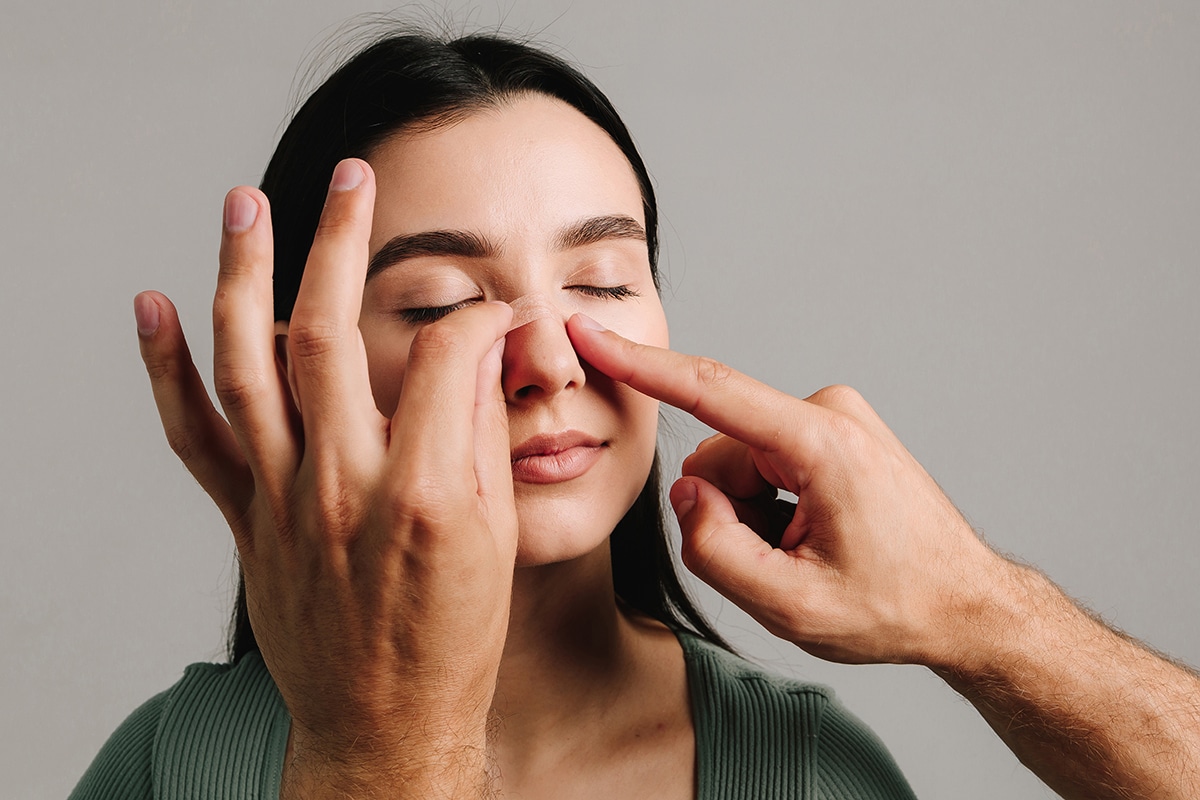
What is Nasal Taping?
Nasal taping after rhinoplasty is a common practice that aims to support the new nasal structure, reduce swelling, and potentially influence the contouring of the nasal skin as it heals. The effectiveness of nasal taping can vary based on individual circumstances, including the thickness of the patient’s skin and the specifics of their surgical procedure.
Research suggests that nasal taping is particularly beneficial in the early postoperative period to manage swelling and help the skin adapt to the new framework of the nose. It’s commonly recommended to maintain the tape for the first 48 to 72 hours after surgery, during which it acts as a stabilizing force. Beyond this initial period, the application of nasal tape can be adjusted based on individual healing processes and surgeon recommendations.
Typically, some surgeons advise continuing taping for one to three months postoperatively to support the best possible outcome [oai_citation:1,Taping Your Nose After Rhinoplasty: A Comprehensive Guide | Justinboey](https://justinboey.com/taping-your-nose-after-rhinoplasty-a-comprehensive-guide/) [oai_citation:2,Nose Taping After Rhinoplasty – Philip Miller MD](https://www.drphilipmiller.com/2022/08/18/nose-taping-after-rhinoplasty/).
However, the benefits of continued taping after the initial postoperative period may vary.
For example, a study highlighted that nasal taping has a more pronounced benefit in patients with thick skin, helping manage persistent swelling that can particularly affect the nasal tip and supratip areas. In contrast, patients with thin skin did not show significant benefits from extended taping [oai_citation:3,The Effects of Taping After Rhinoplasty Surgery – Explore Plastic Surgery](https://exploreplasticsurgery.com/taping-rhinoplasty-surgery/).
Overall, while nasal taping can be a helpful component of the post-rhinoplasty healing process, especially in managing early swelling, its long-term benefits and necessity can depend greatly on individual factors such as skin type and specific surgical details. As always, it’s crucial for patients to follow the tailored advice of their rhinoplasty surgeon to ensure the best outcomes.
Here are some scientific articles and resources that discuss the effectiveness of nasal taping after rhinoplasty:
- Academic Article: An article on the American Society of Plastic Surgeons’ website discusses the methodology and benefits of nasal taping post-rhinoplasty, including reduction in swelling and better adaption of skin to new structures.
- Guidance from Experts: Dr. Barry Eppley’s website, Explore Plastic Surgery, has an article titled “The Effects of Taping After Rhinoplasty Surgery,” which discusses the outcomes of a randomized clinical trial published in JAMA Facial Plastic Surgery (May/June 2016 issue). The trial found that continued taping had a positive effect in thick-skinned patients over most of the nose except the tip. You can access this article directly on Dr. Eppley’s website or look for the JAMA article for a more detailed read.
- Comprehensive Guide: Dr. Philip Miller, a well-known rhinoplasty specialist, often recommends nasal taping for 1-3 months post-surgery as part of the recovery care, which he outlines on his website. His insights into the duration and strategic use of taping can provide more tailored information, especially for long-term care. These resources should give you a good starting point to understand the scientific backing and practical advice regarding nasal taping after rhinoplasty. You might need to access these articles through medical libraries or institutions if they require subscriptions.