

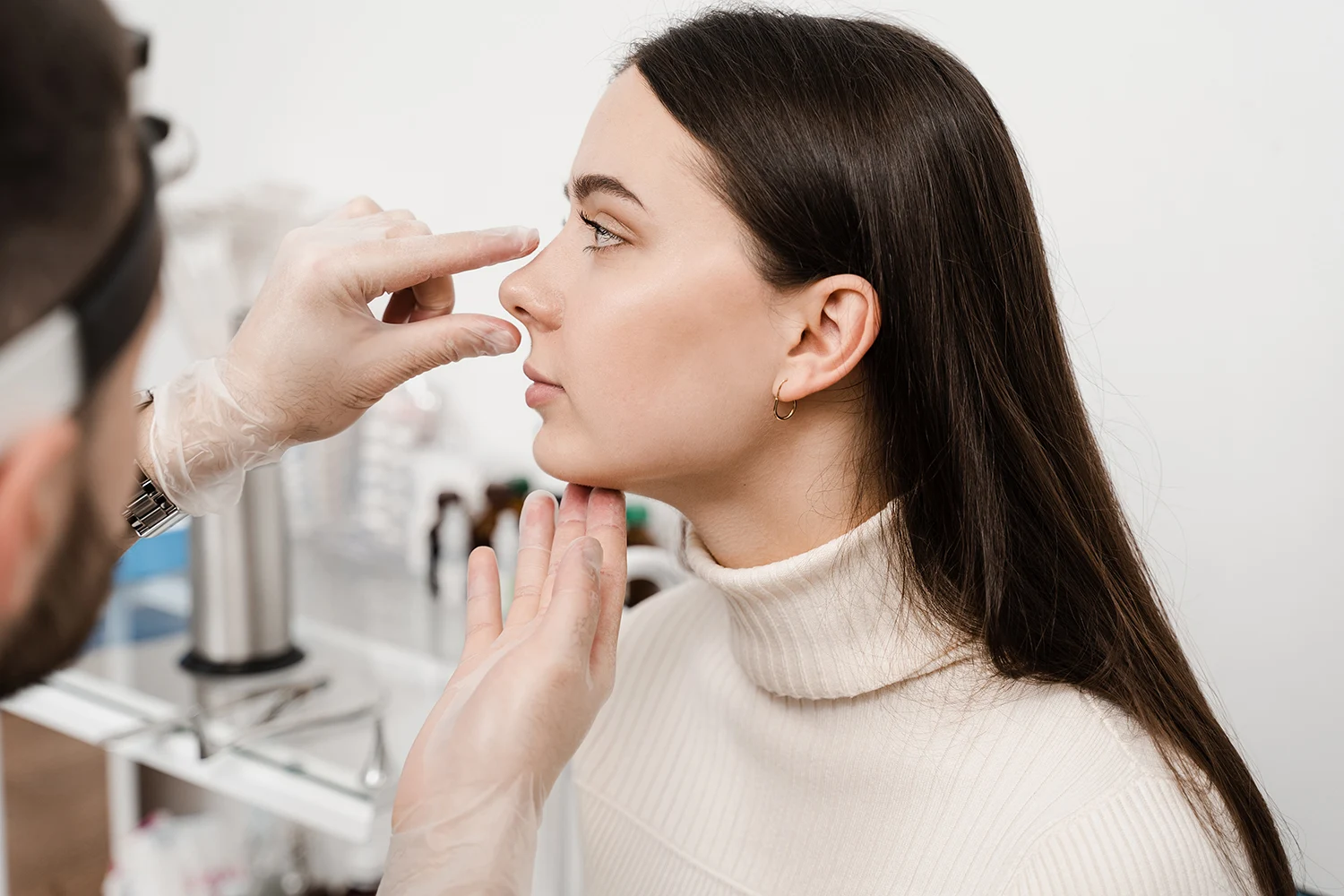
A natural-looking rhinoplasty is planned around your facial proportions, nasal anatomy, skin characteristics and breathing needs—not a universal “perfect nose.” The aim is a nose that fits your features while maintaining a recognizable, individual appearance.
Considering rhinoplasty in Manhattan? Explore the rhinoplasty options at Noses & Necks NYC and request a consultation to discuss your goals, nasal function and realistic expectations.
What makes a rhinoplasty result look natural?
Natural-looking rhinoplasty typically emphasizes proportion, appropriate tip definition, a balanced nasal bridge and a smooth transition between the nose and surrounding features. What appears natural differs from patient to patient. A conservative change can be meaningful, but a dramatic change can also look harmonious when it is carefully matched to the individual.
Why do facial proportions matter in rhinoplasty?
The nose sits at the center of the face, so changes to its bridge, tip, width or projection affect how the forehead, eyes, cheeks, lips and chin appear together. For example, reducing nasal projection may change the apparent relationship between the nose and chin. Planning should consider the whole face rather than treating the nose as an isolated feature.
Is there one ideal nose shape for everyone?
No. Facial structure, skin thickness, nasal cartilage and bone, age, personal preferences and ethnic features all affect what is appropriate. Patients may want to refine a dorsal hump, adjust tip definition or address asymmetry while preserving features that are important to their identity. A thoughtful plan avoids copying a celebrity photograph or imposing one aesthetic standard on every face.
How do the front, side and three-quarter views affect the plan?
A side view can reveal bridge contour, projection and the relationship between the nose and upper lip. A front view helps assess width, symmetry and tip shape. Three-quarter views show how the bridge and tip blend with the cheeks and rest of the face. Because photographs can distort proportions, an in-person examination is important.
Can rhinoplasty look natural and still make a noticeable difference?
Yes. “Natural” does not necessarily mean an invisible change. It means the result looks cohesive with the patient’s features. Some patients seek subtle refinement; others have more significant structural concerns. Surgical possibilities and limitations should be discussed during consultation, and no specific cosmetic outcome can be guaranteed.
Can cosmetic rhinoplasty address breathing problems?
Sometimes. Nasal obstruction can involve the septum, nasal valves, turbinates or other structures. When appropriate, functional concerns may be evaluated alongside cosmetic goals. Preserving or improving nasal support is an important part of planning, but the right treatment depends on an examination and the cause of the breathing problem.
Why is individualized planning important?
Rhinoplasty decisions must account for the skin-soft tissue envelope, cartilage strength, nasal support, prior injuries or operations, and patient priorities. A surgeon may recommend preserving certain features, refining others, or discussing limitations when a requested change could compromise function or appear disproportionate. Patients considering revision rhinoplasty need an especially careful evaluation of existing anatomy and scar tissue.
What should patients ask at a rhinoplasty consultation?
- Which features are affecting the balance of my nose and face?
- What changes are realistic for my skin and anatomy?
- How will nasal support and breathing be evaluated?
- What are the risks, recovery milestones and possible need for revision?
- Can I review relevant before-and-after examples with similar anatomy?
Frequently Asked Questions
What is the difference between natural rhinoplasty and preservation rhinoplasty?
Does a smaller nose always look better?
Will rhinoplasty change how I look from every angle?
How long does it take to see the final rhinoplasty result?
Can people travel to New York City for rhinoplasty?
Explore rhinoplasty in New York City
For patients in Manhattan, the surrounding boroughs, elsewhere in the United States or abroad, a consultation can help clarify whether cosmetic rhinoplasty, functional nasal surgery or revision rhinoplasty is appropriate. Learn more about rhinoplasty at Noses & Necks NYC and discuss an individualized plan with the practice.