

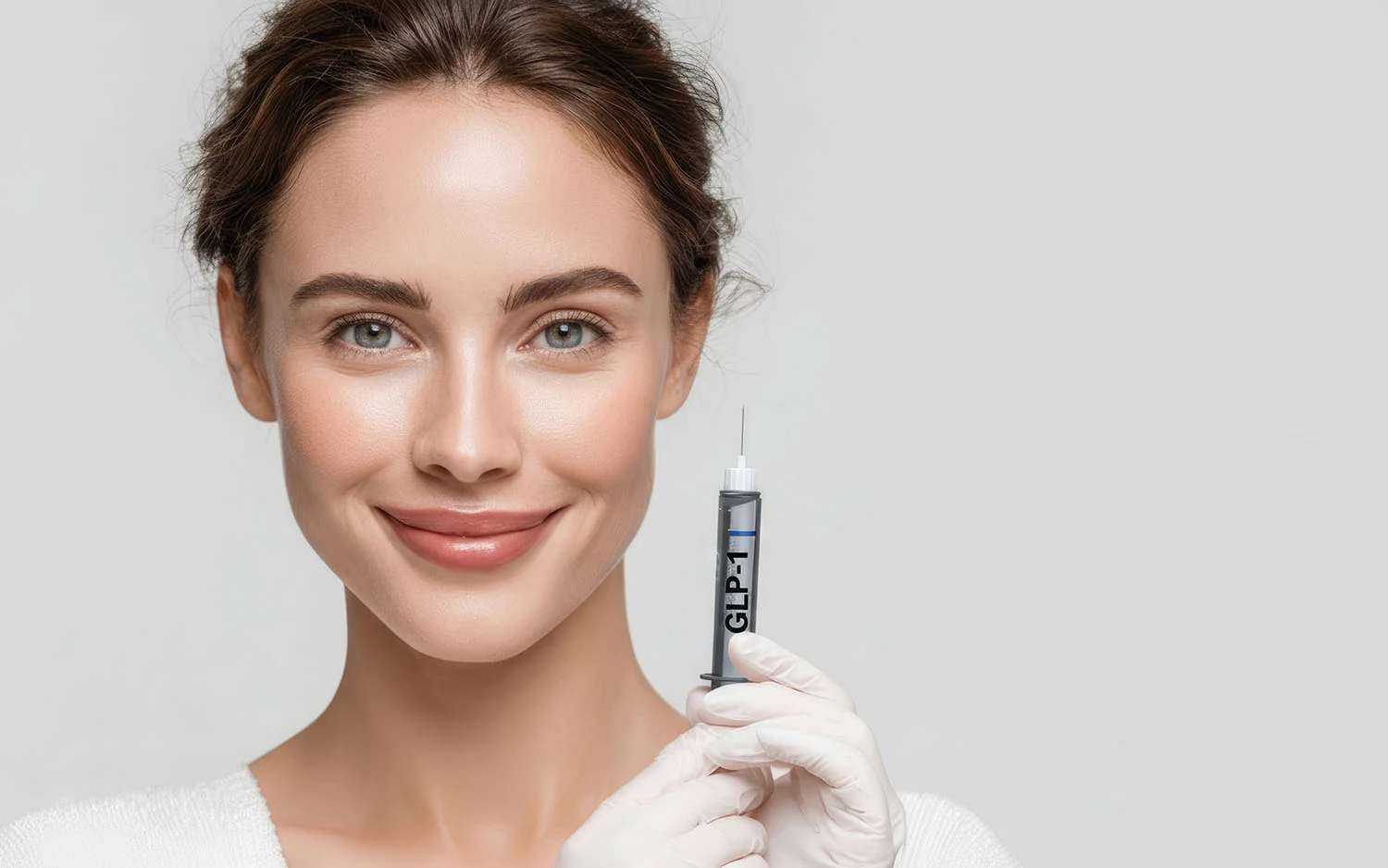
Significant weight loss can change more than the fullness of the cheeks. Facial fat, skin laxity, underlying support and neck contours may all influence appearance. The best approach to post-weight-loss facial rejuvenation starts by identifying which changes are present, rather than assuming every concern needs filler.
Considering facial changes after weight loss? Request a consultation with Dr. Anil Shah at Noses & Necks NYC to discuss an individualized assessment of facial and neck anatomy.
What Does “Ozempic Face” Actually Mean?
“Ozempic face” is an informal term often used to describe a thinner or more aged facial appearance after substantial weight loss. It is not a medical diagnosis, and these changes are not unique to semaglutide or other GLP-1 medications. Similar changes can occur after weight loss through other methods.
Weight loss may reduce facial fullness and make pre-existing skin laxity or folds more apparent. The extent of change varies with age, genetics, baseline anatomy, amount and pace of weight loss, and other factors.
Why Facial Volume Loss Is Only One Part of the Picture
Facial fat is distributed across distinct compartments. As overall body fat decreases, some patients notice flatter cheeks, more visible temples or changes around the eyes. But changes in skin elasticity and soft-tissue position may contribute as much as lost volume.
The underlying facial skeleton and supporting structures also affect how the face looks after weight loss. Not everyone will develop the same concerns, even after losing a similar amount of weight.
Can Filler Fix GLP-1-Related Facial Changes?
Dermal fillers may help selected patients with localized volume loss, but they do not reliably correct significant loose skin or descended tissues. Adding too much volume can create an unnatural or heavy appearance.
A careful evaluation separates hollowing from tissue descent, skin texture changes and neck concerns. Options may include observation, skin-focused care, carefully selected nonsurgical treatments or surgery when appropriate.
Why the Neck and Jawline Matter After Weight Loss
Changes in facial and neck fullness may make skin laxity, jowls, platysmal bands or less-defined jawline contours more noticeable. These findings have different causes and are not all treated the same way.
For some patients, a facelift or neck lift may be considered when tissue descent or laxity is a primary concern. A consultation is needed to determine whether surgery is appropriate and which anatomical structures are involved.
When Should You Consider Treatment After Weight Loss?
If weight is still changing, facial contours may continue to evolve. Discussing weight stability, overall health and nutritional status with the clinician managing weight loss can help guide the timing of an elective aesthetic consultation.
There is no universal waiting period that applies to every patient. A facial plastic surgeon can assess whether concerns are likely to persist and discuss the benefits, limits and risks of each option. Do not stop or change a prescribed GLP-1 medication for cosmetic reasons without speaking to the prescribing clinician.
What About Skin Quality, Hair Shedding and Muscle?
Skin quality and facial contour are related but separate issues. Some people notice dryness or texture concerns, while rapid weight loss or nutritional stress may be associated with temporary hair shedding. Hair loss deserves appropriate medical evaluation rather than being assumed to be a direct medication effect.
Maintaining adequate nutrition and physical activity during weight management is a conversation for the treating medical team. Cosmetic treatments cannot replace assessment of nutritional deficiencies or other medical causes of hair loss.
Facial Rejuvenation in New York City
At Noses & Necks NYC, an individualized consultation with Dr. Anil Shah can focus on the relationship between facial volume, tissue position and neck anatomy. Depending on the findings, a patient may discuss options such as facial volume restoration, facelift or neck lift, or decide that no procedure is needed.
Patients traveling to New York City should also plan for appropriate in-person assessment, postoperative care and follow-up if surgery is recommended.
Frequently Asked Questions
Is “Ozempic face” caused by the medication itself?
Will facial fullness return after my weight stabilizes?
Is filler or a facelift better after weight loss?
Can a neck lift help loose skin after weight loss?
Should I wait until I finish losing weight?
The Bottom Line
“Ozempic face” is not simply a volume problem. Post-weight-loss facial changes can involve fat distribution, skin quality, soft-tissue position and neck contours. The most useful treatment plan begins with an examination of the specific layers involved and realistic goals for a natural-looking result.
To discuss facial or neck changes after weight loss, request a personalized consultation with Dr. Anil Shah at Noses & Necks NYC.