

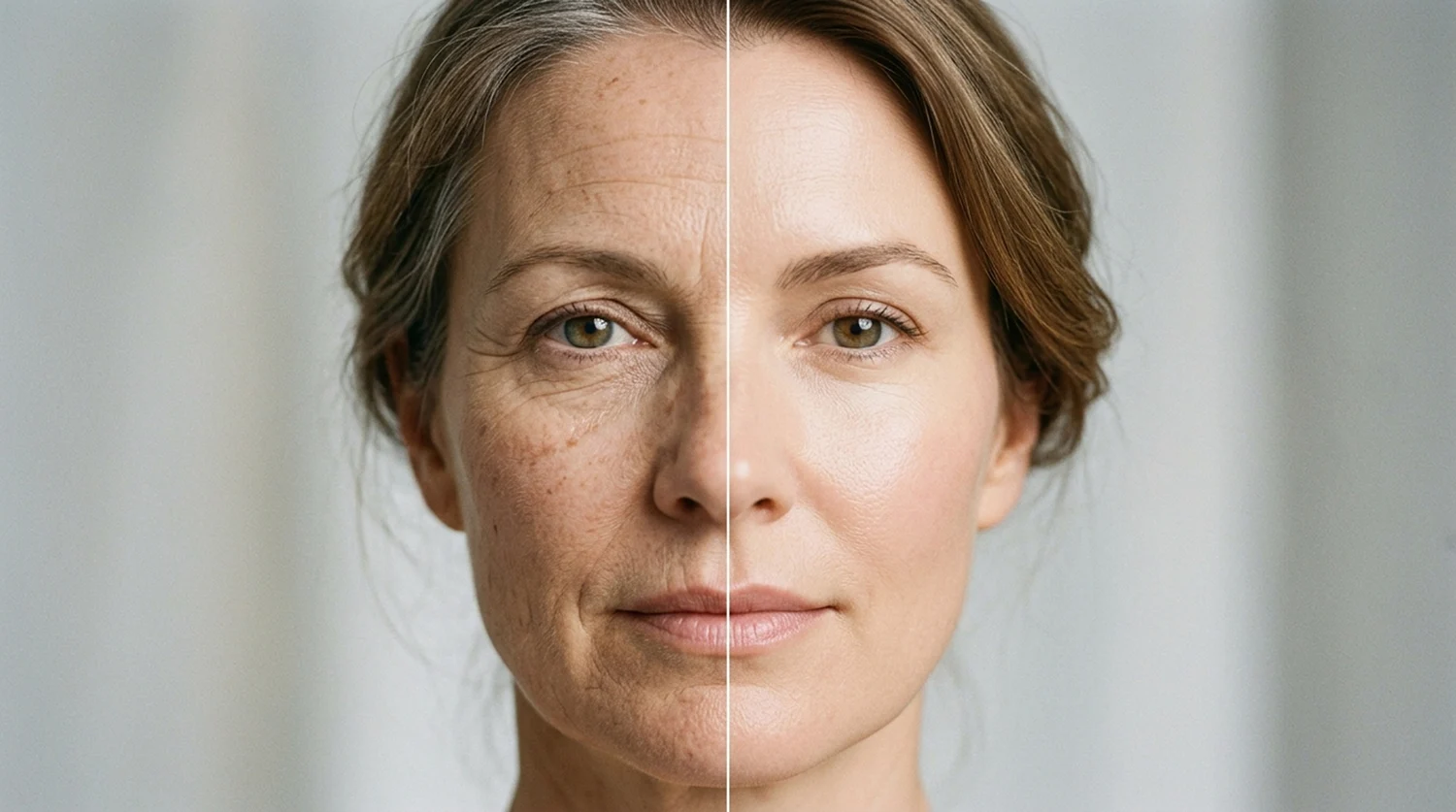
Facial aging is more than wrinkles. Over time, the skin, facial fat, supporting tissues, muscles and underlying bone change in different ways. These changes can create under-eye bags, hollow cheeks, jowls, a less-defined jawline and loose neck skin. Understanding which layers are changing helps explain why skincare, fillers, eyelid surgery, facelift and neck lift procedures address different concerns.
Considering facial rejuvenation in New York City? Explore facelift, neck lift and blepharoplasty options with Noses & Necks NYC, or request a personalized consultation in Manhattan.
What Causes the Face to Age?
Facial aging is a three-dimensional process. Skin texture and elasticity change, facial fat compartments can lose or redistribute volume, supporting tissues may descend, and bone remodeling can alter the foundation beneath the face. Genetics, sun exposure, weight changes and health habits also influence the pace and pattern of these changes.
1. Skin Aging: Collagen, Elasticity and Sun Damage
With age, skin typically becomes thinner and less elastic. Collagen-related changes, cumulative ultraviolet exposure and environmental factors can contribute to fine lines, pigmentation and uneven texture. Sunscreen, appropriate skincare and selected resurfacing treatments may improve skin quality, but they cannot reliably reposition deeper facial tissues or remove significant excess skin.
2. Facial Volume Loss and Fat Redistribution
Facial fat does not disappear uniformly. Some areas, such as the temples and midface, may look more hollow, while other compartments become more prominent or change position. This can contribute to under-eye hollows, altered cheek contours and lower-face fullness. Depending on anatomy, a physician may discuss volume restoration, but adding volume alone is not a substitute for lifting descended tissue.
3. Tissue Descent, Jowls and Jawline Changes
Changes in soft-tissue support and position can contribute to jowls, deeper folds and loss of jawline definition. When the primary concern is descended tissue, a facelift may be considered after examination. A deep plane facelift is one surgical approach; the appropriate technique depends on anatomy, goals, medical history and a surgeon’s assessment.
4. Neck Aging: Skin Laxity, Fullness and Muscle Changes
The neck may show loose skin, visible platysmal bands, fullness or a less-defined chin-neck angle. These concerns have different causes, so treatment varies. Some patients may benefit from nonsurgical care, while others may be candidates for a neck lift. A careful evaluation distinguishes skin laxity from deeper fat, muscle or gland-related anatomy.
5. Eyelid Aging: Heavy Upper Lids and Under-Eye Bags
Aging around the eyes may involve upper-eyelid skin redundancy, changes in fat position, under-eye hollowing and lower-lid puffiness. Blepharoplasty can address selected eyelid concerns, but it is not appropriate for every type of swelling or discoloration. Persistent or sudden eyelid swelling warrants medical assessment rather than assuming it is cosmetic aging.
6. Changes in the Facial Skeleton
Age-related remodeling of facial bone can subtly change the structural support of overlying tissues. Bone changes are only one component of facial aging and do not mean every patient needs added volume or surgery. The overall appearance reflects interactions among bone, fat, skin and soft tissue.
Why Does Everyone Age Differently?
Two people of the same age can show very different patterns. Genetics, skin type, sun exposure, smoking, weight fluctuations, health conditions and prior procedures may all affect facial appearance. A personalized assessment should identify the specific concerns rather than apply a treatment based on age alone.
Which Facial Rejuvenation Treatment Addresses Which Concern?
- Fine lines, pigment and texture — Sun protection, skincare and selected laser or resurfacing treatments
- Expression-related lines — Neuromodulators may be appropriate for selected dynamic wrinkles
- Selected volume deficits — Carefully planned fillers or other volume-restoration approaches
- Excess upper-eyelid skin or certain lower-lid concerns — Blepharoplasty, when clinically appropriate
- Jowls and descended lower-face tissues — Facelift consultation, including discussion of technique
- Neck laxity or structural fullness — Neck lift evaluation and anatomy-specific treatment planning
No single treatment reverses all layers of aging. Surgical and nonsurgical options have different benefits, limitations, risks and recovery requirements.
Frequently Asked Questions About Facial Aging
At what age does facial aging start?
Can fillers replace a facelift?
Why do jowls develop?
Can skincare tighten a sagging neck?
What is the difference between a facelift and a neck lift?
Can out-of-state or international patients consult in NYC?
Explore Facial Rejuvenation in Manhattan
At Noses & Necks NYC, Dr. Anil Shah evaluates facial anatomy and patient goals to discuss appropriate surgical options. Patients in New York City, elsewhere in the United States and abroad can begin by reviewing procedure information and requesting a consultation. Treatment recommendations require individualized evaluation.