

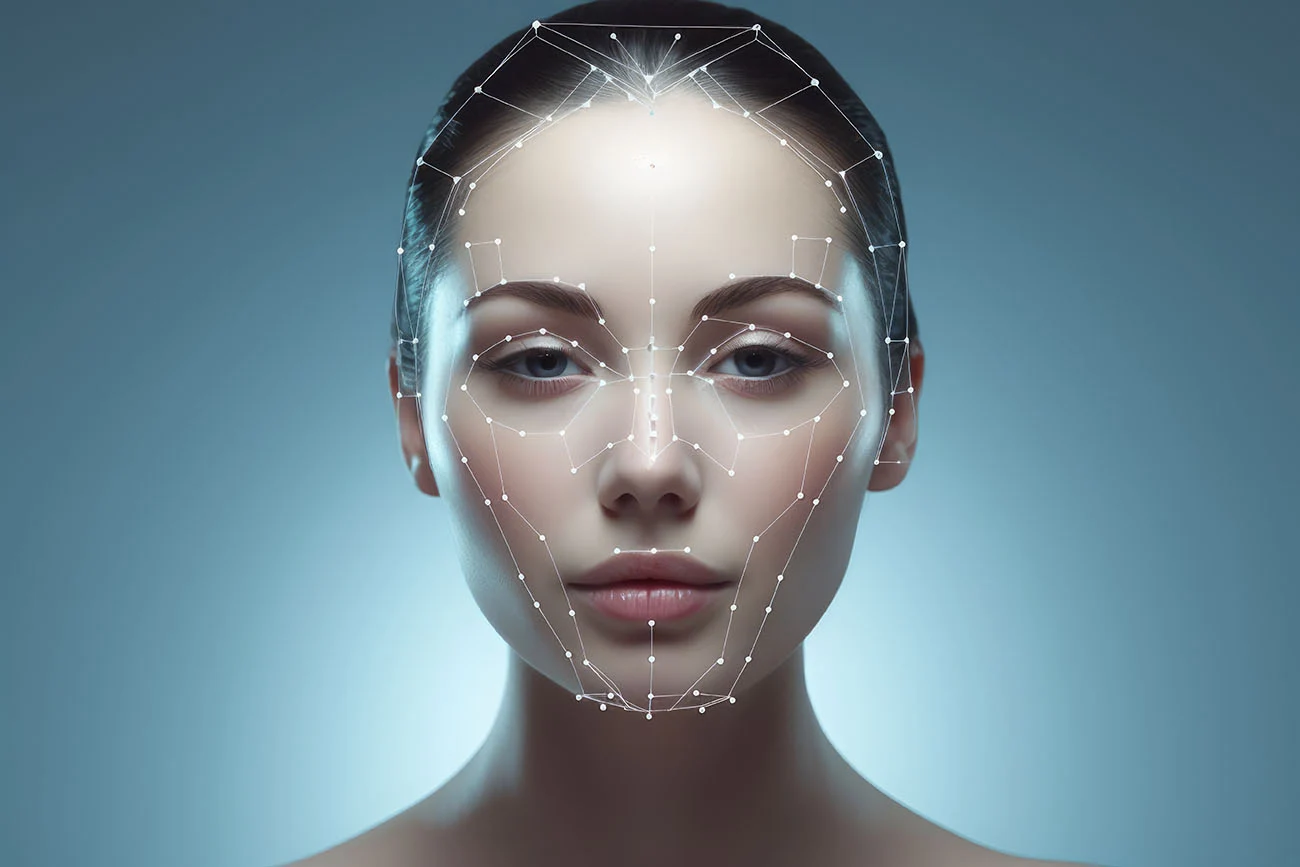
It isn’t always a celebrity. Increasingly, patients are looking at AI-generated or digitally enhanced versions of their own faces—with a smaller nose, sharper jawline, lifted eyes, smoother skin or seemingly perfect symmetry—and asking:
“Can plastic surgery make me look like this?”
For NYC facial plastic surgeon Dr. Anil Shah, an AI image may help start the conversation. But it should never replace an individualized surgical plan.
AI works in pixels. Facial plastic surgery works in anatomy.
The goal of facial surgery shouldn’t be to make you look artificially generated. It should be to create balance and refinement while preserving the characteristics that make your face unmistakably yours.
Considering rhinoplasty or facial rejuvenation in NYC?
Meet with Dr. Shah to discuss what can realistically—and naturally—be achieved based on your anatomy.
What Is “AI Face”?
“AI face” describes an increasingly familiar aesthetic created by artificial intelligence, filters and digital editing: exceptionally smooth skin, highly symmetrical features, a tiny or sculpted nose, elevated brows and eyes, prominent cheekbones, full lips and an extremely defined jawline.
The problem?
A digital face doesn’t have cartilage, ligaments, muscles, an airway or skin that needs to heal.
AI can narrow a nose without considering breathing.
It can sharpen a jawline without considering the relationship between the jaw, chin, facial fat and neck.
It can lift the face without accounting for skin, fat, muscle, fascia and supporting ligaments.
And it can create perfect symmetry even though natural human faces aren’t perfectly symmetrical.
Can I Bring an AI Photo to a Plastic Surgery Consultation?
Yes.
AI-generated images, FaceTune edits, filters and celebrity photos can all be useful communication tools.
They can help your surgeon understand what you’re responding to:
- A more refined nasal tip
- A straighter profile
- A stronger jawline
- Less heaviness through the lower face
- A smoother eyelid-cheek transition
- A more youthful—but still natural—appearance
But the better question isn’t:
“Can you make me look exactly like this image?”
It’s:
“What do I like about this image, and how can that goal translate to my anatomy?”
That distinction matters.
Why AI Can’t Design Your Rhinoplasty
This is particularly important with rhinoplasty.
AI can digitally reduce a nose in seconds. Surgery has to consider the nasal bones, cartilage, septum, tip support, skin thickness, nostrils, facial proportions—and breathing.
A nose also doesn’t exist independently from the rest of the face.
What appears “perfect” on an AI image may not create the most balanced relationship with your chin, lips, eyes or overall facial structure.
Dr. Shah’s approach to rhinoplasty in NYC therefore focuses on individualized refinement rather than giving every patient the same nose.
Why the Same Principle Applies to Facelifts
AI can also create an instantly lifted face.
Real facial aging is considerably more complex.
Skin changes, facial fat shifts, supporting ligaments change and deeper tissues descend. The relationship between the face, jawline and neck changes as well.
That’s why modern facelift surgery isn’t simply about pulling skin tighter.
Dr. Shah’s preservation-focused philosophy evaluates the deeper structures contributing to facial aging and determines what should be repositioned—and what should be preserved.
The goal isn’t a generic “lifted” face.
It’s a rejuvenated version of your face.
The Danger of the “Perfect” Reference Photo
Reference images become problematic when they stop communicating a preference and start establishing an impossible standard.
AI images commonly exaggerate the same aesthetic characteristics:
Tiny noses. Perfect symmetry. Lifted eyes. Extreme jawlines. Poreless skin. Identical facial proportions.
When everyone is digitally pushed toward the same ideal, individuality begins to disappear.
A face isn’t a template.
And one of the most important parts of facial plastic surgery is knowing what not to change.
Should Plastic Surgery Make You Look Different?
Ideally, facial plastic surgery should improve the feature that bothers you without making you unrecognizable.
A thoughtful rhinoplasty shouldn’t erase identity.
A thoughtful facelift shouldn’t freeze expression.
A thoughtful neck lift shouldn’t create a jawline that looks disconnected from the face.
A thoughtful blepharoplasty shouldn’t make the eyes look hollow or fundamentally different.
The objective is balance: refined, rested and rejuvenated—without looking manufactured.
That philosophy is particularly important in an era when social media and AI can make increasingly unrealistic faces appear normal.
What Dr. Anil Shah Looks for Instead of “Perfection”
At Noses and Necks NYC, Dr. Anil Shah’s practice is dedicated to facial plastic surgery, with extensive experience in rhinoplasty and face and neck rejuvenation.
Rather than asking how closely surgery can reproduce a generated image, consultation should determine:
What feature are you actually responding to?
What bothers you about your real face?
Which anatomical structure is creating it?
What can safely and realistically be changed?
What should be preserved?
What result will still look like you?
That is where surgical expertise becomes more important—not less important—in the age of AI.
A Smarter Way to Use AI Before Plastic Surgery
Bring the image.
Just don’t expect it to become a blueprint.
Use AI images, filters and inspiration photos to show your surgeon the direction you’re drawn toward: softer, stronger, younger, more defined, less tired or more refined.
Then let anatomy guide the surgical plan.
For patients researching rhinoplasty, facelift, neck lift or eyelid surgery in New York City, an individualized consultation can help separate what’s digitally possible from what’s surgically appropriate.
Your Face Shouldn’t Look Generated
Technology will continue changing what we see when we look at ourselves.
But good facial plastic surgery shouldn’t chase every new filter, algorithm or beauty trend.
The best result should still have character.
It should move naturally. It should make sense with the rest of your features. And years later, it should still look like it belongs to you.
At his Manhattan practice, Dr. Anil Shah combines detailed facial analysis with an anatomy-driven approach to rhinoplasty and facial rejuvenation designed to refine rather than replace individual identity.
Because the goal isn’t to become the AI version of yourself.
It’s to look like yourself—only refined.