

Submandibular Gland Reduction in NYC
Advanced Neck Contouring in Manhattan with Dr. Anil Shah’s Ultrasonic Approach

What Are the Submandibular Glands?
The submandibular glands are one of the major pairs of salivary glands. They sit beneath the lower jaw and play an important role in producing saliva. Although these glands are normal anatomical structures, their size and position can influence the contour of the upper neck. When the superficial portion of the gland is prominent, it may create fullness beneath the jaw that can interrupt an otherwise defined jawline-to-neck transition.
This distinction matters because what appears externally to be “neck fat” may sometimes involve structures located much deeper beneath the skin.
How Can the Submandibular Glands Affect Neck and Jawline Definition?
A youthful-looking neck depends on the relationship among several anatomical layers, including the skin, superficial and deep fat, platysma muscle, deeper neck structures, and underlying support tissues. Prominent submandibular glands can create fullness beneath the jaw even in patients who are relatively lean or have little superficial fat. Because the glands are located within the deeper anatomy of the neck, treatments designed only to remove fat or tighten skin cannot directly address gland prominence.
This is one reason Dr. Shah evaluates the neck layer by layer rather than assuming every patient needs the same operation. The visible contour may be influenced by several structures at once, and the surgical plan should reflect the anatomy creating the concern.
What Is Submandibular Gland Reduction?
Submandibular gland reduction is an advanced surgical technique in which a portion of a prominent submandibular gland is removed to decrease excess volume beneath the jaw. For aesthetic neck contouring, the objective is not to remove the entire salivary gland.
Dr. Shah’s published technique describes partial resection of the superficial portion of the gland during deep neck lift or facelift surgery. Reducing this excess volume can improve definition along the jawline and the angle between the jaw and neck.
Because the submandibular region contains important nerves, blood vessels, and other delicate structures, this is a highly specialized component of deep neck surgery that requires careful patient selection and precise surgical technique.
Who May Benefit from Submandibular Gland Reduction?
Submandibular gland reduction is not necessary for every neck lift patient. It may be considered when gland prominence is one of the anatomical factors contributing to fullness beneath the jaw.
You may benefit from evaluation for submandibular gland reduction if you have:
- Persistent fullness beneath the jaw despite relatively little superficial neck fat
- Bulging or fullness associated with prominent submandibular glands
- Limited jawline-to-neck definition caused partly by deeper neck anatomy
- Multiple anatomical contributors to neck fullness requiring a deeper surgical approach
- Plans for a deep neck lift or facelift in which gland prominence may affect the final contour
- Good overall health and realistic expectations for surgery
Dr. Shah evaluates the entire neck rather than determining candidacy based on appearance alone. The goal is to identify which anatomical structures are actually creating the visible fullness and address only those that require treatment. For more general information about neck lift candidacy and planning, explore our Neck Lift Surgery FAQs.
Dr. Shah’s Ultrasonic Approach to Submandibular Gland Reduction
Submandibular gland reduction requires precision because the glands are located within a complex area of the deep neck surrounded by important nerves, blood vessels, and other delicate structures. Dr. Shah uses advanced ultrasonic dissection technology when performing partial submandibular gland reduction as part of appropriate neck-contouring procedures.
Unlike traditional electrocautery, which uses electrical energy and generates higher temperatures to cut tissue and control bleeding, ultrasonic dissection uses high-frequency mechanical vibration to cut and seal tissue simultaneously with less thermal energy. This allows for precise dissection while limiting unnecessary heat exposure to the surrounding tissues.
Dr. Shah’s approach is supported by his published research in Aesthetic Surgery Journal Open Forum evaluating ultrasonic dissection compared with electrocautery for partial submandibular gland resection. His research explored the potential of ultrasonic technology to improve the safety and efficiency of this technically demanding component of deep neck surgery.
For patients, the value of this approach is not simply the technology itself. It is how Dr. Shah incorporates advanced surgical tools into an anatomy-driven treatment plan designed to address deeper sources of neck fullness while preserving the surrounding structures whenever possible.
How Does Submandibular Gland Reduction Fit Into a Deep Plane Neck Lift?
Submandibular gland reduction may be incorporated into a deep plane neck lift when prominent glands contribute to fullness beneath the jaw. Because a deep plane approach allows Dr. Shah to address structures beneath the superficial layers of the neck, gland prominence can be evaluated alongside other sources of fullness and laxity.
Not every deep plane neck lift requires submandibular gland reduction. When the glands contribute meaningfully to the contour, partial reduction may help create a smoother transition from the jawline into the neck. When they do not, other layers can be addressed without unnecessary treatment of the glands.
This individualized philosophy is also central to Dr. Shah’s 5-Layer Neck Lift, which addresses neck aging and contour across multiple anatomical layers.
What Does Dr. Shah Evaluate During Consultation?
Determining whether submandibular gland reduction belongs in your surgical plan begins with identifying what is actually creating the fullness beneath your jaw. Dr. Shah evaluates:
- Submandibular gland size and prominence
- The location and amount of superficial and deep neck fat
- Platysma position and banding
- Deeper muscular anatomy
- Skin quality and laxity
- Chin and jawline structure
- Overall face-to-neck proportions
When appropriate, imaging may provide additional information about the deeper anatomy. Based on this evaluation, Dr. Shah can determine whether the submandibular glands should be addressed and how gland reduction may fit into the overall surgical plan.
What to Expect During and After Submandibular Gland Reduction
Submandibular gland reduction is typically performed as part of a larger facial or neck-contouring procedure, such as a deep plane neck lift or facelift. Dr. Shah carefully accesses the deeper neck anatomy and removes a portion of the prominent gland using his ultrasonic approach when gland reduction is appropriate. The surgical and recovery experience depend on the other techniques included in your treatment plan. In general patients can expect:
- Anesthesia tailored to the surgical plan and procedures being performed
- Partial rather than complete gland removal to reduce prominence beneath the jaw
- Ultrasonic dissection to precisely cut and seal tissue with less thermal energy than traditional electrocautery
- Swelling and tightness during the early stages of healing
- Temporary changes in sensation that may occur as the deeper neck tissues recover
- Individualized postoperative instructions and follow-up based on the extent of surgery performed
Recovery should really be considered in the context of the entire operation rather than submandibular gland reduction alone. Patients undergoing combined facial or neck surgery can review the Face & Neck Lift Pre & Post Surgery guide for additional information about preparing for surgery and the recovery process.
FAQs About Submandibular Gland Reduction in NYC
Can prominent submandibular glands make my neck look full?
Is the entire submandibular gland removed?
Can liposuction correct all types of neck fullness?
This is why Dr. Shah evaluates the anatomy beneath the skin before recommending treatment. Identifying which structures are creating the visible fullness helps determine whether liposuction, deeper neck contouring, submandibular gland reduction, or a combination of techniques may be appropriate.
What are the risks of submandibular gland reduction?
Dr. Shah uses ultrasonic dissection to cut and seal tissue with less thermal energy than traditional electrocautery, an approach designed to allow precise dissection while limiting unnecessary heat exposure to surrounding tissues. His published research has evaluated the potential of this technology to improve the safety and efficiency of partial submandibular gland reduction. Careful patient selection, detailed knowledge of deep neck anatomy, and precise surgical technique remain essential to minimizing risk.
Will submandibular gland reduction affect saliva production?
Is submandibular gland reduction part of a neck lift?
How do I know whether my neck fullness comes from fat or the submandibular glands?
What is ultrasonic submandibular gland dissection?
How much does submandibular gland reduction cost in NYC?
The cost of submandibular gland reduction varies based on the complexity of your anatomy, the extent of correction needed, and whether gland reduction is performed as part of a deep plane neck lift, facelift, or other procedure. After evaluating your anatomy and developing a personalized surgical plan, Dr. Shah and his team will provide detailed pricing based on the procedures recommended for you.
Before & After Gallery
Why Choose Dr. Anil Shah for Submandibular Gland Reduction NYC?
Dr. Anil Shah is a double board-certified facial plastic surgeon whose practice is devoted to procedures of the face and neck. His approach to neck rejuvenation emphasizes understanding the deeper anatomical structures that create visible contour rather than treating every case of neck fullness as excess skin or fat.
For patients considering a highly specialized procedure such as submandibular gland reduction, Dr. Shah brings:
- Double board certification in facial plastic surgery and otolaryngology–head and neck surgery
- Specialized head and neck surgical training, including residency in Otolaryngology–Head and Neck Surgery and fellowship training in Facial Plastic and Reconstructive Surgery
- Extensive face and neck lift experience, with more than 4,000 face and neck lift procedures reported by his practice
- An anatomy-driven approach to advanced neck rejuvenation, including his 5-Layer Neck procedure designed to address multiple structural layers rather than surface aging alone
- Published research in submandibular gland surgery, including research evaluating ultrasonic dissection for partial submandibular gland reduction
- Academic experience in facial plastic and head and neck surgery, including appointments at New York University and the University of Chicago
His combination of deep anatomical knowledge, surgical experience, and ongoing research allows Dr. Shah to determine not only how to address prominent submandibular glands, but whether treating them is appropriate within a patient’s overall neck-contouring plan.
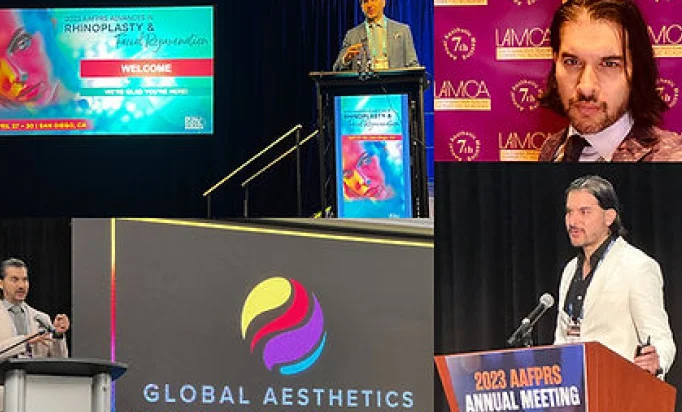
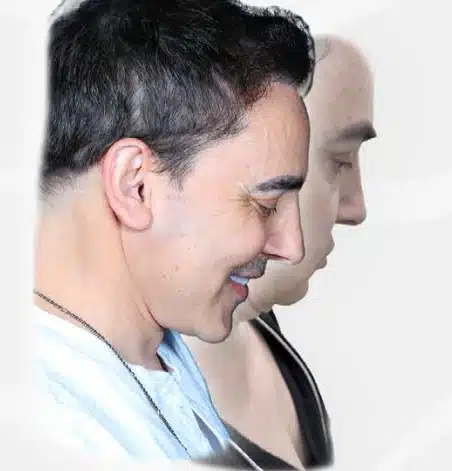
Meet Eric H.
A fashion designer turned actor came to Dr. Anil Shah seeking a comprehensive facial transformation. He entrusted Dr. Shah with blepharoplasty to banish under‑eye fatigue, a signature neck lift to sharpen his jawline, and several other tailored enhancements to harmonize his features. Now, having transitioned from behind‑the‑scenes visionary to on‑camera talent, he steps confidently into the spotlight—camera‑ready and
radiating the renewed confidence his roles demand.

Who is Eric?
Eric Himel first made his mark by styling celebritiese like Rachel Brosnahan for her award‑season appearances—curating gowns and ensembles that perfectly complemented her breakout role in The Marvelous Mrs. Maisel. After years of channeling his creative vision through other stars, he realized it was time to claim the spotlight himself. To ensure his personal image matched the bold, narrative‑driven style he’d been crafting, Eric turned to Dr. Anil Shah—whose expertise in facial aesthetics refined his features and helped him fully embody the fashionable celebrity he’d always designed for. Now, Eric doesn’t just dress icons… he is one.
ACT 1: Blephroplasty
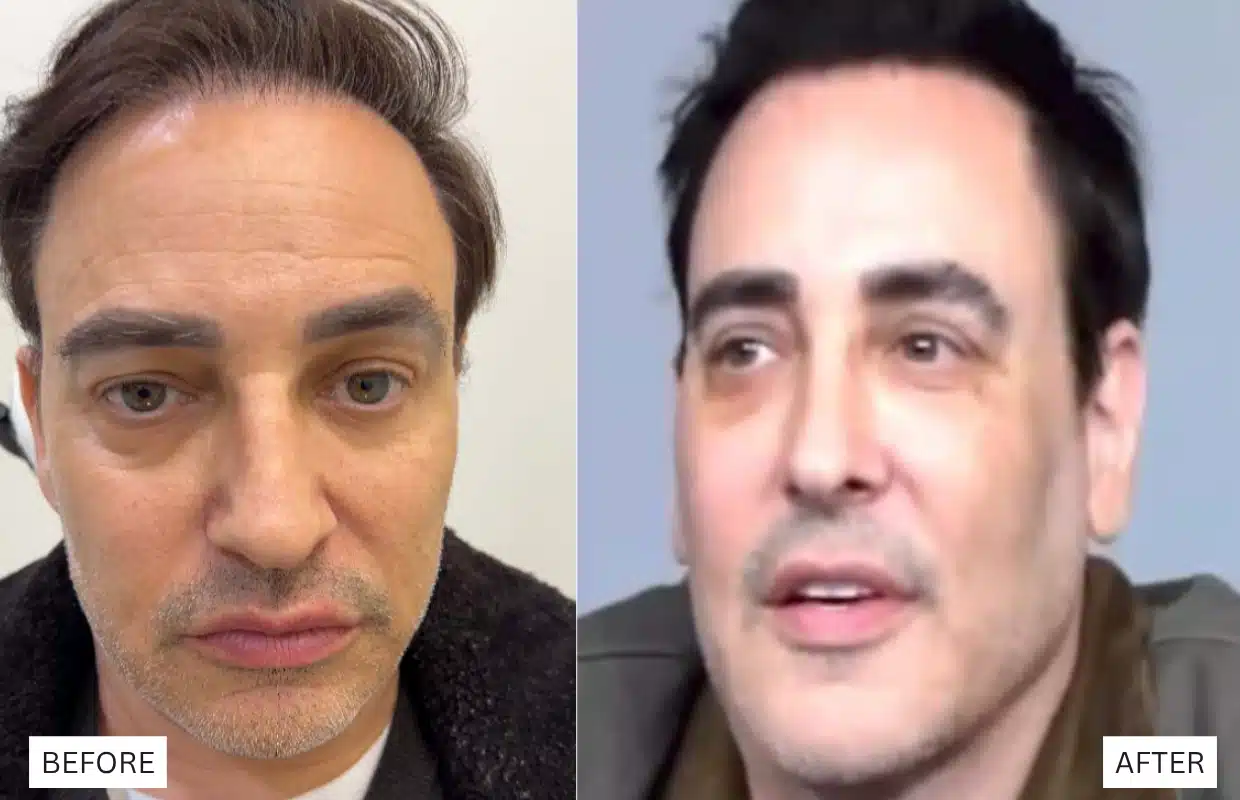
Eric Himel’s first step into surgical refinement was an upper blepharoplasty with Dr. Anil Shah—a procedure designed to remove excess skin and, when needed, fat from the upper eyelids to lift hooded lids, create a crisp lid crease, and open the eyes for a more alert, youthful appearance. In Dr. Shah’s hands, the incision is discreetly hidden within the natural eyelid crease, and his specialized suturing technique minimizes postoperative bumps (milia) and ensures smooth healing. Behind this refined approach lies Dr. Shah’s deep anatomical expertise, as detailed in his own peer‑reviewed work. In the landmark study “Prevention of lower eyelid malposition after blepharoplasty: Anatomic and technical considerations of the inside‑out blepharoplasty,” he outlines the precise handling of eyelid retractors and soft tissues to preserve eyelid position and function—principles that inform his upper‑lid technique just as much as his lower‑lid work. This subtle yet transformative surgery was Eric’s springboard from designer to the face of his own brand. This subtle yet transformative surgery laid the foundation for Eric’s transition from behind‑the‑scenes designer to the runway‑ready face of his own brand.
Act 2: Hair Restoration on Eyebrows
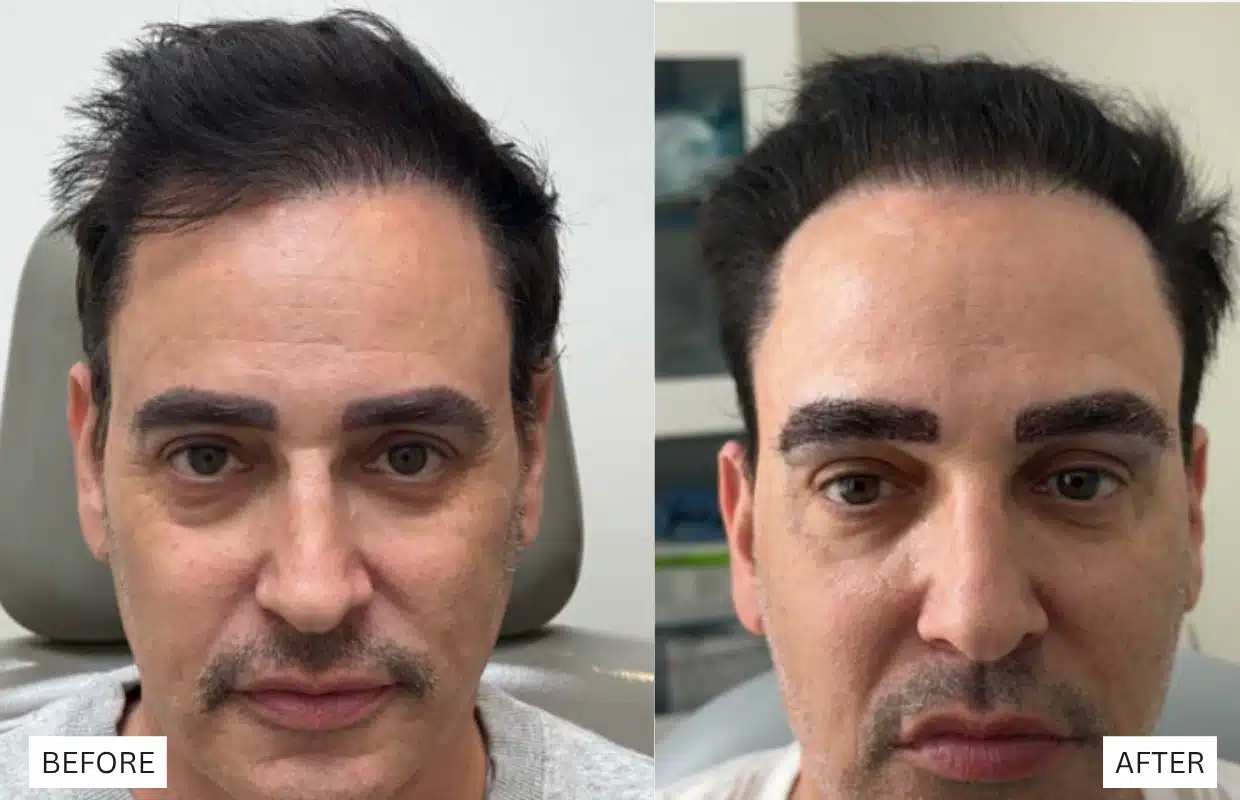
For Eric, who had concerns about thinning in his eyebrows, I recommended the FUT (strip) method for his restoration. He had previously undergone microblading, but over time the pigment darkened and the lines thickened, leaving him with an unnatural look that didn’t match his features. With FUT, I was able to harvest healthy grafts from the back of his scalp and meticulously place them to recreate natural, soft, and precisely angled brows. The strip method gave us the control and density needed to address his concerns while avoiding further trauma to the area. It was the ideal approach to give Eric a lasting, natural result that aligned with his aesthetic goals.
I performed Eric’s hair transplant using the FUT method, carefully selecting and extracting the grafts to ensure we had the highest quality follicles for his brows. Dr. Sameea was in charge of designing and directing the placement of each individual hair—an essential part of the process, since eyebrow hairs grow in multiple directions and lie flat due to the tight pull of the skin in that area. It’s a complex, detailed procedure that requires collaboration and precision. Together, we were able to create a natural, symmetrical result that complements Eric’s face and restores his confidence.
Act 3: Deep Necklift
I performed Eric’s hair transplant using the FUT method, carefully selecting and extracting the grafts to ensure we had the highest quality follicles for his brows. Dr. Sameea was in charge of designing and directing the placement of each individual hair—an essential part of the process, since eyebrow hairs grow in multiple directions and lie flat due to the tight pull of the skin in that area. It’s a complex, detailed procedure that requires collaboration and precision. Together, we were able to create a natural, symmetrical result that complements Eric’s face and restores his confidence.
Start with a Complimentary Virtual Consultation for Submandibular Gland Reduction
If fullness beneath your jawline persists despite having relatively little superficial fat, deeper structures such as the submandibular glands may be contributing to your neck contour.
A consultation with Dr. Shah can help determine whether gland prominence, fat, muscle, skin laxity, or a combination of anatomical factors is responsible—and whether submandibular gland reduction should be incorporated into your surgical plan.
For a virtual, complimentary consultation, contact Noses and Necks NYC or book online to learn more about advanced neck contouring with Dr. Anil Shah in Manhattan.
Related Procedures
Testimonials

D.M.
Thank you to Dr. Shah and the team for the exceptional care I received while under your trust. From the moment I walked in, your staff made me feel so comfortable and at ease. Team Shah listened attentively to my concerns and provided treatment that yielded AMAZING results. Four months after my procedure, I am recovering well, and I am very pleased with the outcome. Dr. Shah and staff are truly some of the most caring people and 100% customer-centric!
N.A.
I am left speechless with the service they provided to me. Staff and Dr Shah are impeccable. Excellent service and great work! I loved my rhinoplasty results!! I waited so long to find the right surgeon, and Dr Shah was that surgeon for me!! Excellent work!
L.J.
Dr. Shah saved my face and my confidence! After two failed sinus surgeries and botched rhinoplasties, Dr. Shah worked on my nose with persistence and patience until he got it right. Not only is he a good surgeon but he is a kind and friendly man. He was concerned for my well-being as a person, not just as a patient, throughout our time together. My husband and I always say, “Dr. Shah is awesome, go see him” to anyone considering sinus reconstruction or rhinoplasty or anything that includes facial aesthetics. The staff is friendly and helpful.
Contact
Anil Shah, MD, FACS
Facial Plastic Surgeon • New York City
Signature Procedures
World-renowned Facial Plastic Surgery in New York City
7,000+ Rhinoplasties - 4,000+ Face & Neck Lifts
© Dr. Anil Shah. All Rights Reserved.
Website Design & SEO by NKP Medical
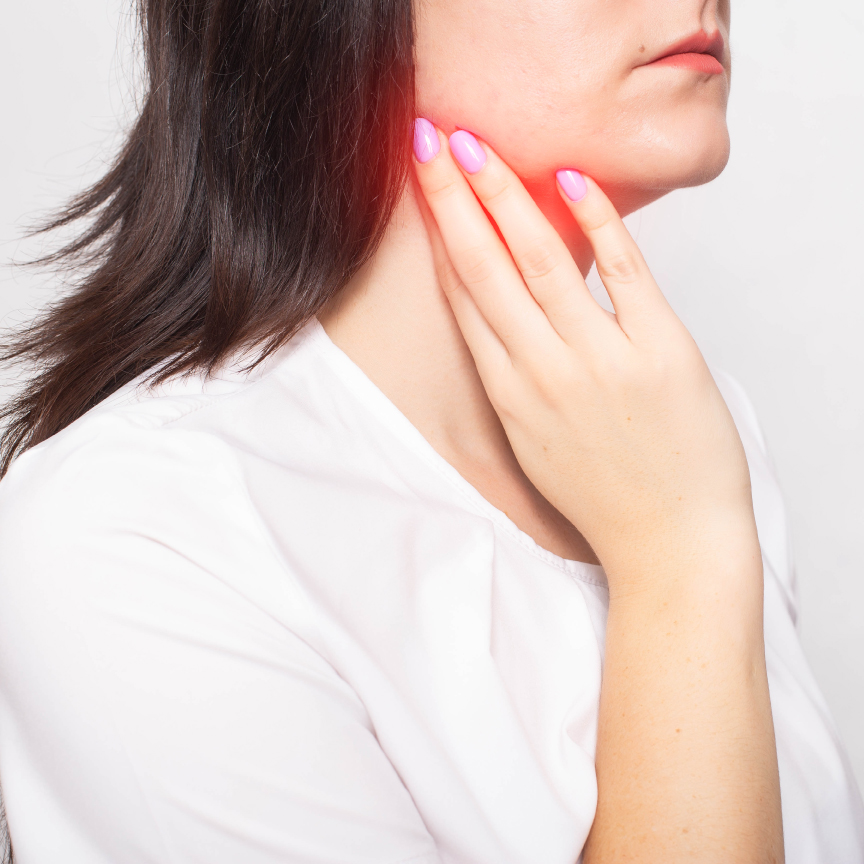
Dr. Shah has also published research evaluating the use of ultrasonic dissection for partial submandibular gland reduction, reflecting his continued focus on advancing the techniques used to address the deeper anatomy of the neck.