

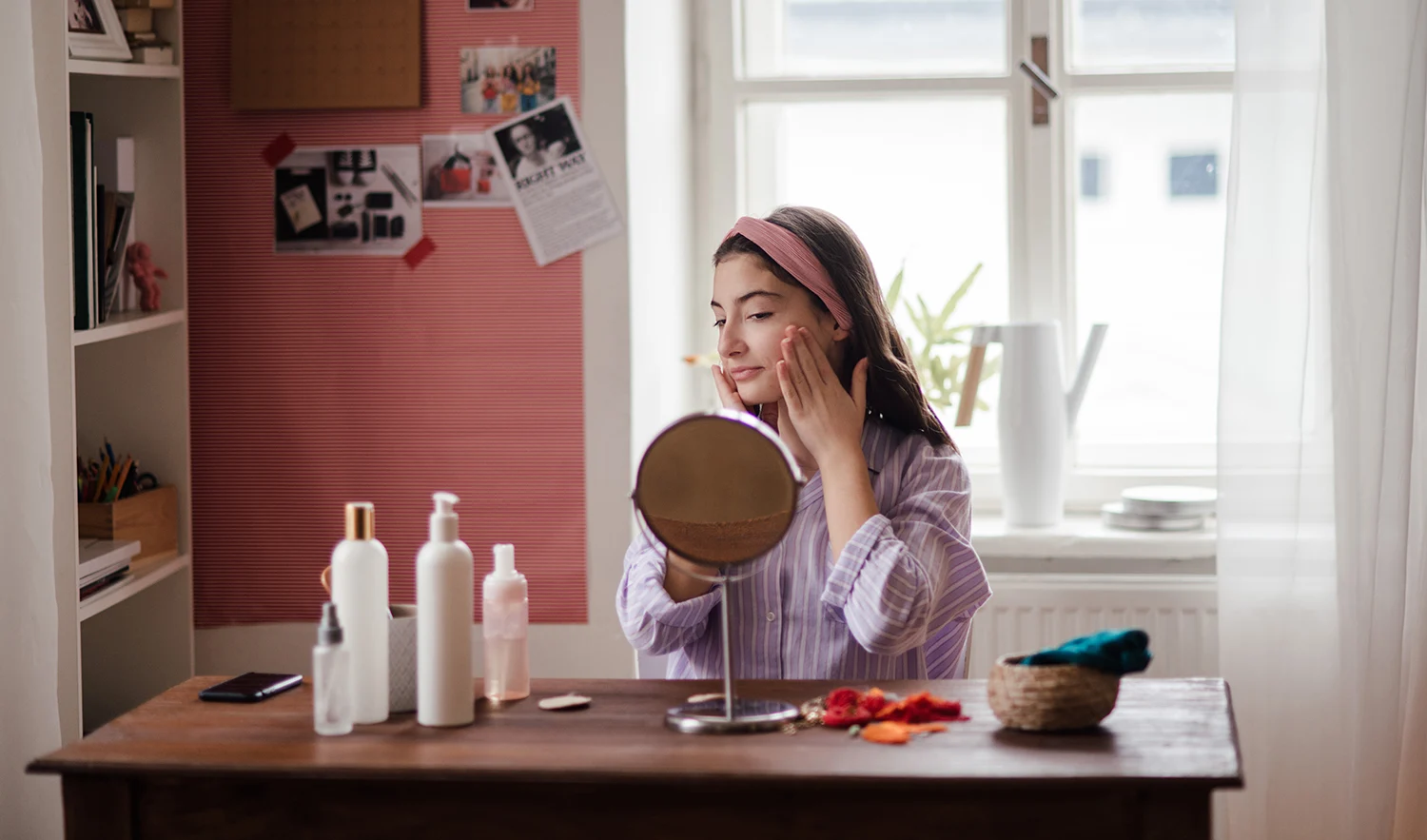
Teen skincare routines are becoming more complicated, but most teenagers do not need anti-aging products. Gentle cleansing, moisturizer, daily sun protection and appropriate acne treatment are usually a better starting point than layering retinol, exfoliating acids and multiple serums. The right routine depends on the individual’s skin and any medical concerns.
Concerned about persistent acne, irritation or product reactions? Seek guidance from a qualified dermatologist or other appropriate clinician. Families considering facial care in New York City should prioritize skin health over social-media trends.
Why Are Teens Using Anti-Aging Skincare?
Social platforms expose preteens and teenagers to elaborate skincare routines designed for adults. Products marketed for wrinkles, firmness or collagen support can seem essential even when there is no age-related concern to treat. This is not simply a product-choice issue: it can also create pressure to view ordinary pores, texture and expression lines as flaws.
A younger person’s skin can have real needs, including acne, dryness, sensitivity and pigment changes. Those needs should guide care rather than the age of an influencer recommending a product.
What Does Teenage Skin Actually Need?
For many teens, a short, consistent routine is sufficient:
- A gentle cleanser suited to skin type, without harsh scrubbing.
- A non-comedogenic moisturizer when skin is dry or irritated.
- Broad-spectrum SPF 30 or higher sunscreen during the day, with reapplication as directed.
- Evidence-based acne treatment when needed, ideally guided by a clinician for persistent or moderate-to-severe acne.
Prescription or over-the-counter acne treatments can include ingredients also found in adult skincare, such as retinoids. That does not make them inappropriate for teenagers; the important distinction is using them for a defined medical reason and with suitable instructions, rather than as a preventative anti-aging trend.
Can Too Many Skincare Actives Damage the Skin Barrier?
Yes. Combining exfoliating acids, retinoids, abrasive scrubs and fragranced products can contribute to dryness, burning, peeling and irritation. In some patients, inflammation can leave lingering discoloration. More products do not necessarily produce better skin.
If a routine causes persistent stinging, redness or peeling, stop potentially irritating products and seek professional advice. Do not continue an aggressive routine simply because it is popular online.
Do Teens Need Retinol, Peptides or Collagen Creams?
Most teens do not need anti-aging products solely to prevent wrinkles. Retinoids may be prescribed for acne, but cosmetic anti-aging use is a different question. Peptide and collagen-focused marketing should not be mistaken for proof that a young person needs those products. Ingredient choice should be based on a specific skin concern, evidence and tolerability.
When Should a Teen See a Dermatologist?
Professional evaluation is especially helpful when acne is painful, scarring, widespread or persistent; when a product reaction does not settle; or when pigment changes are developing. Early, appropriate acne care can help reduce the risk of lasting scars. A clinician can also assess whether a rash or irritation is actually acne.
The Emotional Cost of “Preventative” Beauty
Normal skin texture, visible pores, occasional breakouts and facial expression are not signs of failure. Teenagers should not feel compelled to buy adult products or pursue cosmetic changes to meet a filtered online standard. Parents and caregivers can help by emphasizing comfort, skin function and realistic expectations rather than appearance perfection.
A Healthier Starting Point
The best teenage skincare routine is not the longest one. It is the simplest routine that addresses the skin’s actual needs, protects against ultraviolet exposure and avoids unnecessary irritation. Good skincare starts with healthy habits, not a race to prevent aging before it begins.
Frequently Asked Questions
Should a 13-year-old use anti-aging skincare?
Is retinol always unsafe for teenagers?
Can too much skincare cause breakouts?
What sunscreen is best for teens?
When is acne serious enough for a doctor?
About the Author
Dr. Anil Shah | Noses & Necks NYC. This article provides general education about skincare trends and is not a substitute for individualized dermatologic advice. Physician authorship and final clinical review should be confirmed before publication.